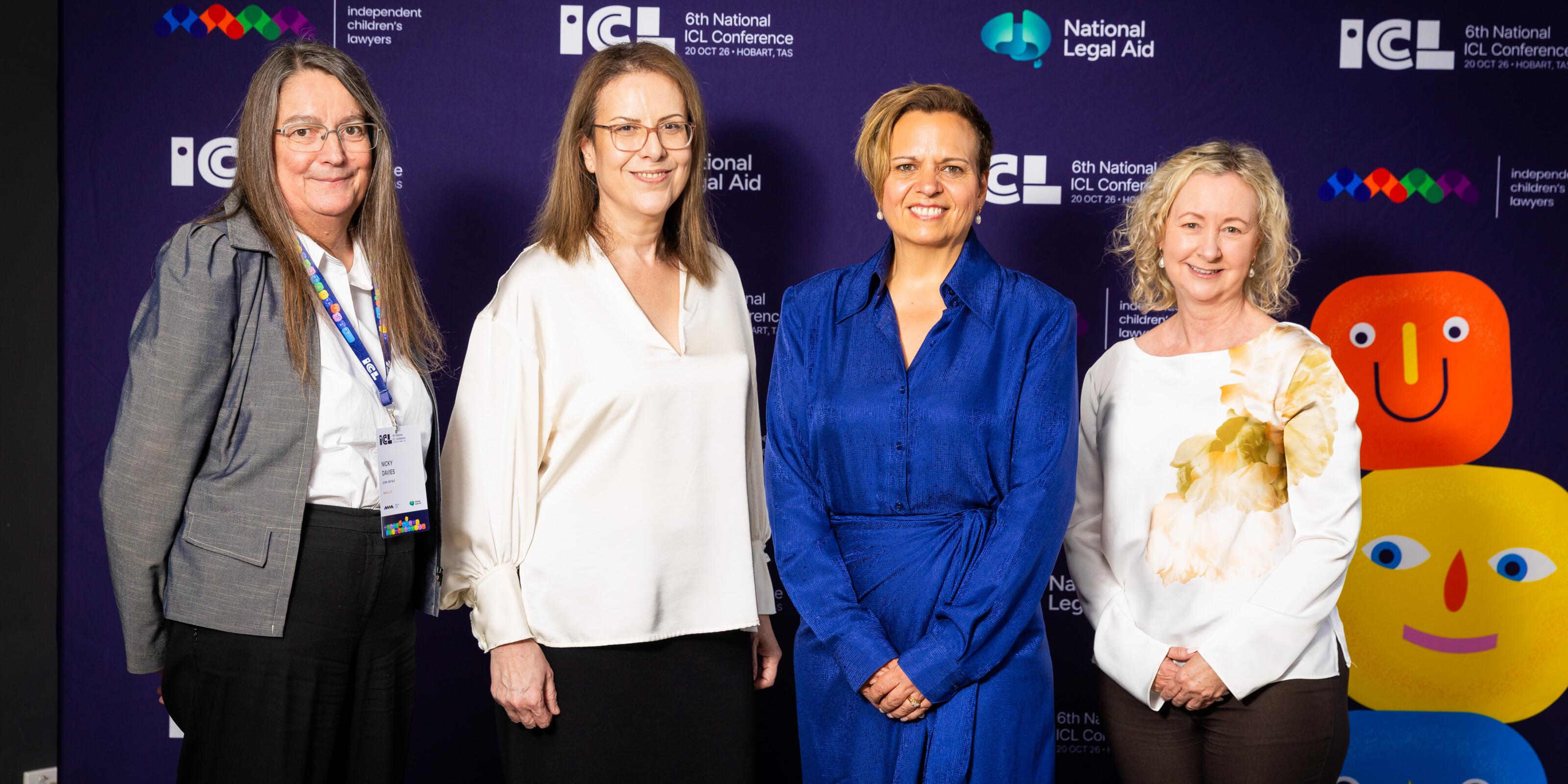
Last week National Legal Aid was honoured to host the 6th National Independent Children's Lawyers Conference in Nipaluna/Hobart.
The conference brought together over 200 ICLs, judicial officers, and key stakeholders to explore emerging developments in ICL practice and reflect on an increasingly complex environment.
ICLs play a critical role in ensuring children's voices, experiences and circumstances are properly heard before the Court, and we want to take this opportunity to thank ICLs for the tireless and inspiring work that they do.
NLA's Chair, Annmarie Lumsden, delivered the welcoming remarks (which can be read in full below) and the Chair of our Family Law, Dispute Resolution, and Child Support Working Groups, Legal Aid Queensland CEO Nicky Davies, closed the conference.
Both the Chief Justice and the Attorney-General acknowledged the expertise, professional judgement, and courage required of ICLs, particularly in matters involving heightened risk and complexity. They recognised the growing pressures on the ICL workforce, noting that as family law matters become more complicated, a well-supported, sustainable, and adequately resourced ICL workforce remains essential to the effective operation of the family law system.
The Attorney-General spoke about the Australian Government’s ongoing commitment to improving outcomes for children and families, including through the implementation of the Second Action Plan under the National Plan to End Violence Against Women and Children. She also reflected on concerns raised by Legal Aids and National Legal Aid regarding workforce capacity and funding pressures, indicating that these issues are being carefully considered as part of broader discussions about the long-term sustainability of the sector.
We wish to conclude by acknowledging the incredible ongoing work by the Independent Children's Lawyers program who organised the conference with help from Tasmania Legal Aid.
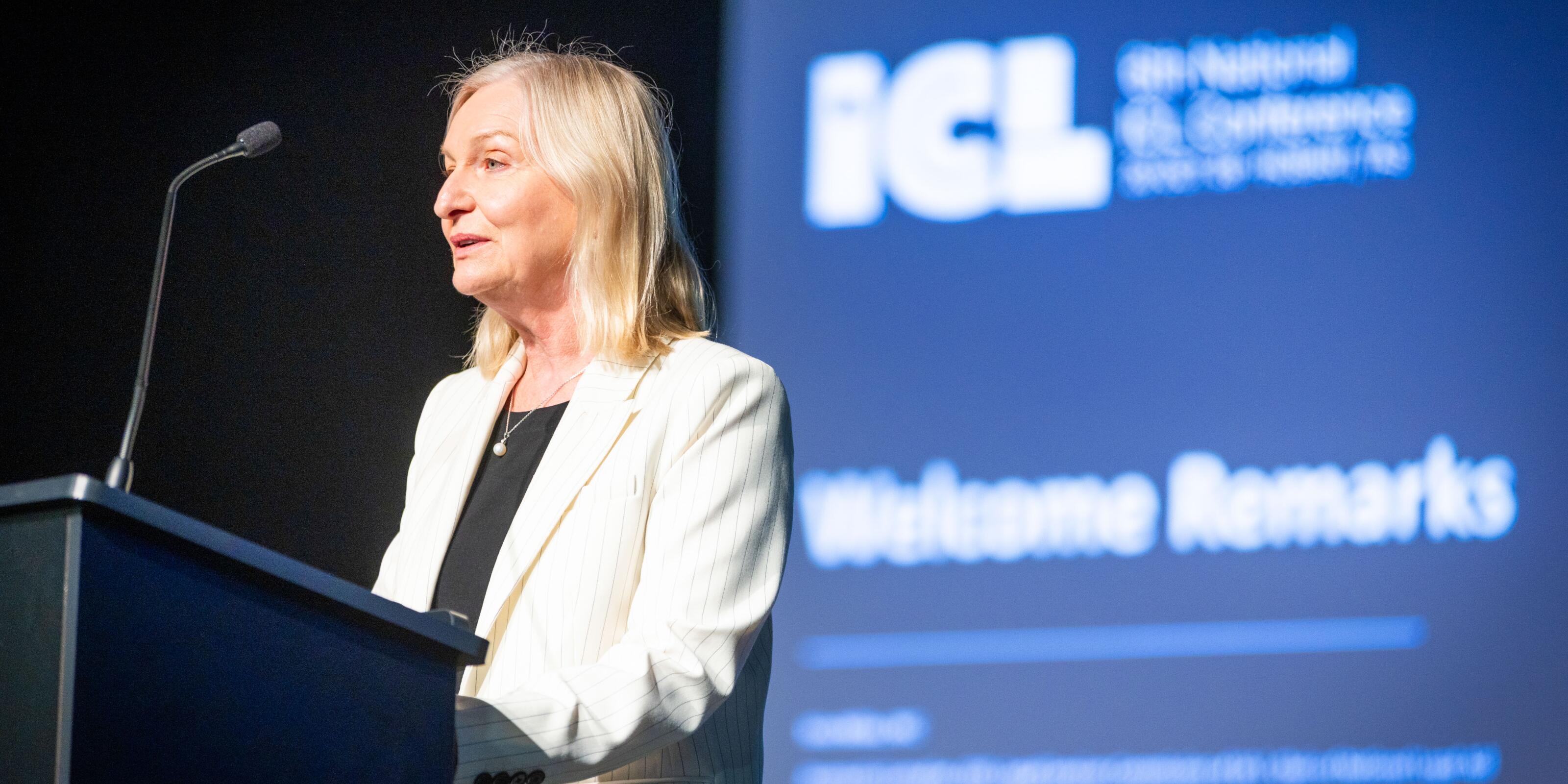
Welcoming Remarks by National Legal Aid Chair, Annmarie Lumsden
I would also like to acknowledge the Muwinina people, the Traditional Owners of the Land upon which we gather for this conference. I also acknowledge and pay respects to all Tasmanian Aboriginal Communities, Elders past and present, and First Nations colleagues joining the conference today.
Welcome to the National ICL Conference 2026. I warmly welcome our distinguished guests, presenters, facilitators and delegates from across Australia.We are fortunate to have distinguished speakers presenting at the conference today, including:
- The Honourable Michelle Rowland MP Attorney-General of Australia
- The Honourable William Alstergren AO, Chief Justice of the Federal Circuit and Family Court of Australia
- The Honourable Marcus Turnbull, Judge of the Federal Circuit and Family Court of Australia
- The Honourable Alexandra Colquhoun, Judge of the Federal Circuit and Family Court of Australia
- Mr David Mandel, Chief Executive Officer Safe & Together Institute
- Ms Nicky Davies, Chief Executive Officer of Legal Aid Queensland, and Chair of the National Legal Aid Family Law Working Group
- Mr Matthew Verney, King's Counsel, Tasmania Bar
I also acknowledge and welcome distinguished guests:
- The Honourable Justice Robin Cohen SC, Family Court of Western Australia
- The Honourable Yvette D’Ath, Executive Director, National Legal Aid
- Ms Tania Wolff, President, Law Council of Australia as well as other representatives from the Law Council of Australia
- We also acknowledge and welcome delegates from the Attorney-General's Department.
I’d also like to acknowledge the strong representation of Independent Children's Lawyers in the room today. We are fortunate to be joined by 104 private panel ICLs and 63 Legal Aid ICL practitioners from jurisdictions across the country. Thank you for the work you do every day to advance the best interests of children and young people.
When we gather at conferences such as this, it’s easy to focus on the technical legal issues, the emerging case law, and the challenges confronting our profession. Those discussions are, of course, important. But today's conference is also an opportunity to pause and recognise the significance of the role ICLs play in the family law system.
Independent Children’s Lawyers ensure children’s voices, experiences and best interests remain central during some of the most difficult times in their lives. This demanding work requires legal expertise, sound judgement, resilience and compassion, and is also an extraordinary privilege.
Decisions in the family law system can profoundly shape children’s daily lives, relationships and safety, so children must remain at the centre of our discussions today. The role of an ICL has rightly been recognised by the judiciary as one of the most important functions within parenting proceedings. You bring an independent, child-focused perspective to complex proceedings. You help ensure the Court has the evidence it needs. You help children participate in decisions that affect them; ensuring their views and circumstances are properly understood and taken seriously, and their safety and wellbeing are firmly in focus.
Many of you may have heard the comments made by members of the judiciary who have described ICLs as "the apex of the family law profession" and, in parenting matters, "the most important person in the Court." Those remarks reflect not only the complexity of the work undertaken by ICLs, but also the immense trust that the courts place in the quality of your advocacy and your commitment to children.
As many of you will appreciate from your own practice, the landscape in which Independent Children's Lawyers operate continues to evolve, bringing with it increasing complexity and new challenges.
Family violence remains one of the most significant challenges facing the family law system. FCFCOA data indicates that domestic and family violence allegations are present in 86% of parenting matters before the Court, and child abuse allegations in 77% of matters. These cases often involve intersecting risks and complex family dynamics, while children’s safety and wellbeing must remain central.
The work calls not only for legal expertise, but also independence, judgement, and the ability to engage safely and sensitively with children and families. These are skills that are fundamental to good ICL practice. That is why today's program places a strong emphasis on family violence, trauma-informed engagement, evidence gathering, contemporary research and emerging best practice.A child-centred family law system requires a strong, skilled and sustainable ICL workforce. National Legal Aid recognises the complexity and intensity of this work and the pressures on practitioners.
Quality representation requires time, specialist capability, professional support, learning opportunities and a sustainable practitioner network. Through the National ICL Program, National Legal Aid supports ICLs through national accreditation, training and mentoring, tailored resources and professional development.
One of the National ICL Program's major initiatives over the past few years has been the development of a customised domestic and family violence e-learning course for ICLs in partnership with the Safe & Together Institute. We are incredibly proud of this initiative.
Developed specifically for ICLs, the course reflects close collaboration between the Safe & Together Institute, the National ICL Program, experienced ICL practitioners and allied health professionals.
It reflects our shared commitment to practical, specialised and evidence-informed professional development for ICLs.
The course builds on the internationally recognised Safe & Together Model, already used by FCFCOA judicial officers and Court Child Experts.
Its aim is to build a common language and shared understanding across the family law system of domestic and family violence and its impact on children. We are fortunate to have David Mandel with us today to explore these concepts further.
Many of you will know the national ICL website, an important hub for training, resources and collaboration. It provides webinars, national resources, jurisdiction-specific precedents, family law updates and learning materials developed for ICLs.
Our longstanding partnership with the Australian Institute of Family Studies has been central to this work. We are deeply grateful for AIFS’s support in developing and maintaining the website’s curated Social Science Resources and Significant Cases Library, giving ICLs ready access to legal authorities, contemporary research and evidence for child-focused advocacy.
Staying informed about both law and social science has never been more important. Understanding children’s experiences requires not only legal analysis, but also insight into child development, trauma, attachment, mental health and broader social factors.
This multidisciplinary approach also underpins another exciting National ICL Program initiative: the Emerging Minds ICL Learning Series.
Developed with Emerging Minds, this trauma-informed series helps ICLs understand children’s mental health and wellbeing, engage confidently with children and apply evidence-informed practice.
It is fitting that session two of the series forms part of today’s program.
Professional development is only one part of sustaining a strong ICL community. Equally important are opportunities to connect and learn from one another. ICL practice can be isolating, particularly in complex, high-risk matters or when practitioners lack a local peer network. That is why the National ICL Mentoring Program remains so valuable.
The program connects newer panel members with experienced practitioners to share knowledge, seek guidance and build confidence, while enabling experienced ICLs to strengthen the profession by passing on their expertise.
We encourage all ICLs, whether new or highly experienced, to participate in and support this national network.These initiatives are complemented by practical resources for ICLs, children, young people and their parents. One recent example is the launch of two national Hague Convention resources for children and ICLs involved in international parental child abduction proceedings.National Legal Aid is committed to the future of the national ICL community. We will continue working with ICLs, Legal Aid Commissions, the Courts, government and the broader family law sector to strengthen independent representation for children.
Every child who encounters the family law system should know that their safety, experience and voice matter.
On behalf of National Legal Aid and the eight Legal Aid Commissions, thank you for the expertise, care and judgement you deliver each and every day to ensure children are seen, heard and protected.
I said earlier children will be at the centre of the work we do here today. That can only occur because of the dedication of each of you in this room and those around the country who practice as Independent Children’s Lawyers. NLA acknowledges that although you perform this work with purpose and compassion, your role should not be acknowledged merely in platitudes but genuine investment in your worth.
Changes to family law policy, complexity and demand have led to ICLs having to perform significant hours without the deserved remuneration, as well as the rates in which you are paid. NLA wants to assure everyone today that we have and will continue to advocate for improved funding to recognise your worth. Without you, vulnerable children in the family law system do not have a voice.
I hope today gives you time to learn, reflect, reconnect and take away new ideas for strengthening this important work together.
There is much to be proud of as the National ICL Program grows, professional development expands and collaboration across jurisdictions strengthens.
As National Legal Aid assumes responsibility for hosting the conference, we sincerely thank the Courts’ Children’s Committee. Its leadership has shaped this valued national forum since its inception, and we are grateful for its longstanding and continuing support.
Today is an opportunity to engage with emerging issues, learn from one another and strengthen the relationships that underpin this work. I encourage you to ask questions, share your experiences and make the most of the expertise in this room.
Thank you for being here, for the contribution you make each day and for keeping children’s voices, experiences and best interests at the heart of the family law system.
As Chair of National Legal Aid, it is my great pleasure to be here in Nipaluna—Hobart with you all and to officially welcome you to the Sixth National Independent Children’s Lawyer Conference.
Thank you.